JillLebofsky may earn a commission if you buy through links on this page, at no extra cost to you. That does not change what we report.
Part of our Ignitra overview. Last checked October 28, 2026.
Ignitra side effects are most likely to be digestive, such as bloating, gas or loose stools, based on its named ingredients konjac fiber and berberine. A 10-trial analysis of berberine reported "only mild gastrointestinal adverse events".[1] The bigger issue is that the vendor publishes no dose for any of its six named ingredients, and at least five more are never named, so nobody can judge the safety margin of one capsule.[2]
Is Ignitra safe? Safety at a glance
The biggest caution is berberine: it lowers blood sugar, so it can stack with diabetes medicines, and NCCIH says it can harm newborns, so it is not for pregnancy or breastfeeding.[3][4] For most healthy adults, the likely side effects are mild stomach and bowel changes.
FDA's adverse event database (CAERS) returned no reports naming Ignitra, and FDA recall searches returned no matches, checked October 28, 2026.[5][6] We could not load FDA's tainted weight loss products list, so that was not checked. The label lists "No Stimulants" and "Made in a FDA registered facility"; registration is not approval, and FDA does not approve dietary supplements before sale.[2]
What side effects are possible?
Possible side effects fall into three groups: digestive upset, individual sensitivity to plant extracts, and effects tied to medicines. Each comes from research on the named ingredients, not on Ignitra itself.
Digestive
Konjac glucomannan trials reported belching, bloating, loose stools, gas, diarrhea, constipation and abdominal discomfort.[7] Berberine causes mild stomach effects in trials.[1] Prickly pear trials noted stomach intolerance.[8]
Sensitivity and rare events
Prickly pear trials also reported flu-like symptoms.[8] Konjac swells in water: tablets caused 7 cases of esophageal blockage in Australia in 1984 and 1985, and a separate case involved a glucomannan pill mass.[9][10] Take capsules with a full glass of water. One person developed severe lactic acidosis after 12 months of daily mangosteen juice.[11] Riboflavin can turn urine bright yellow, which is harmless.[12]
Medication-related
Berberine and konjac lowered blood glucose in trials, so low blood sugar is possible with diabetes drugs.[4][13] Turmeric may raise bleeding risk with blood thinners.[14]
Which ingredients deserve extra attention?
Berberine, turmeric and mangosteen carry the clearest safety notes; konjac matters for swallowing and digestion. The table uses only published sources. Because Ignitra hides its doses, you cannot tell how close a capsule is to the amounts in these reports.
| Ingredient | Safety issue | Why it matters |
|---|---|---|
| Berberine HCl | Lowers blood glucose; can harm newborns[3][4] | Diabetes drug users and pregnant or nursing women |
| Turmeric extract | LiverTox rates it a likely cause of liver injury; 30 hepatitis cases tied to high-absorption, high-dose curcumin[15][16] | Ignitra does not say whether its extract is a high-absorption form |
| Mangosteen | Possible interference with some chemotherapy; possible added effect with cyclosporine and tacrolimus[17] | Cancer patients and transplant recipients |
| Konjac fiber | Gut symptoms; tablet blockage reports[7][9] | People with swallowing problems |
| Prickly pear | Gut intolerance; may add to glucose and blood pressure drugs[8][18] | People on those medicines |
| Riboflavin | No upper limit set; yellow urine[12] | Low concern |
Which medicines could interact?
Take this list to a pharmacist before starting Ignitra, along with the names of every prescription and supplement you use. These are medicine groups flagged by the ingredient research, not tested interactions with Ignitra, which has never been studied with any drug.
- Diabetes medicines (insulin, metformin and others): berberine, konjac and prickly pear may lower glucose further.[4][13][18]
- Blood pressure medicines: prickly pear lowered blood pressure in trials.[8]
- Blood thinners and antiplatelet drugs: turmeric may raise bleeding risk.[14]
- Chemotherapy: mangosteen's antioxidant effect may interfere.[17]
- Cyclosporine or tacrolimus: possible added effect with mangosteen.[17]
Our Ignitra ingredient breakdown covers each ingredient's research.
Pregnancy, breastfeeding and who should ask a doctor first
Several groups should talk with a doctor before taking Ignitra, and some should skip it.
- Pregnant or breastfeeding women: berberine is not advised, and NCCIH says turmeric supplements may be unsafe in pregnancy.[3][14]
- People with diabetes or on glucose-lowering drugs.
- People with liver disease or a history of liver problems.
- Anyone on blood thinners, chemotherapy or transplant drugs.
- People with swallowing problems or a narrowed esophagus.
Which symptoms need a doctor right away?
Stop Ignitra and see a doctor right away if you notice any of these. Call 911 for trouble breathing or chest pain.
- Yellow skin or eyes, dark urine, pale stools or pain under the right ribs (possible liver injury)
- Food or a capsule feeling stuck, chest pain or trouble swallowing
- Shaking, sweating, confusion or fainting (possible low blood sugar)
- Swelling of the face, lips or throat, hives or wheezing
- Unusual bruising or bleeding
- Fast breathing, severe weakness or vomiting that does not stop
How to start more carefully if you try it
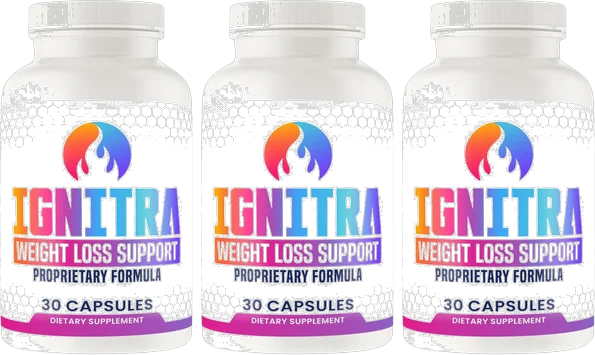
- Photograph the Supplement Facts on the bottle you receive and show it to your pharmacist.
- Take each capsule with a full glass of water, since konjac swells.
- If you take diabetes medicines, ask your doctor how often to check your blood sugar, because berberine lowers it.
- Stop at the first sign of a symptom from the list above.
- Keep your ClickBank order ID: the checkout lists a 90-day return window, and returns need every bottle sent back. Details are on our Ignitra price and refund page.
Safety conclusion
For a healthy adult not on medicines, Ignitra's named ingredients point to mild digestive effects as the main risk. Pregnancy, breastfeeding, diabetes drugs, liver problems and blood thinners change that picture, and the hidden doses mean nobody can say how strong one capsule is. Show the bottle label to your doctor or pharmacist before you start. Our Ignitra seller check and weight loss evidence page cover the rest.
Back to the Ignitra overview.
Frequently asked questions
Does Ignitra cause diarrhea or bloating?
It can. Konjac fiber, one of its named ingredients, caused bloating, gas, loose stools and diarrhea in trials, and berberine causes mild stomach effects. Ignitra's doses are not published, so how often this happens with one capsule is unknown.
Can you take Ignitra with metformin?
Ask your doctor first. Berberine and konjac both lowered blood glucose in trials, so combining Ignitra with metformin or other diabetes drugs could push blood sugar too low. Ignitra itself has not been tested with any medicine.
Is Ignitra bad for your liver?
No liver injury from Ignitra has been reported in FDA's adverse event database as of October 28, 2026. Its turmeric extract is a concern only if it is a high-absorption form, which has been tied to rare hepatitis; the vendor does not say.
Can you take Ignitra while pregnant?
No. Ignitra contains berberine, which NCCIH says can harm newborns and is not for pregnancy or breastfeeding. NCCIH also says turmeric supplements may be unsafe in pregnancy. Talk with your obstetrician about any weight plan.
Does Ignitra have caffeine?
The vendor shows a No Stimulants badge, and none of the six named ingredients is caffeine or a stimulant. At least five ingredients are unnamed, so read the label on the bottle you receive to confirm.
Sources
- Berberine in nonalcoholic fatty liver disease: meta-analysis of 10 randomized trials. PubMed, read October 19, 2026.
- Ignitra sales page. getignitra.com, read October 28, 2026.
- Goldenseal (berberine safety). NCCIH, read October 19, 2026.
- Berberine: overview of 54 systematic reviews and meta-analyses. PubMed, read October 19, 2026.
- CAERS adverse event search for Ignitra. openFDA, U.S. Food and Drug Administration, read October 28, 2026.
- Food enforcement (recall) search for Ignitra. openFDA, U.S. Food and Drug Administration, read October 28, 2026.
- Glucomannan for weight loss in overweight and obese adults: meta-analysis of 8 randomized trials (Onakpoya 2014). PubMed, read October 20, 2026.
- Opuntia (prickly pear) and cardiometabolic risk: meta-analysis of randomized trials. PubMed, read October 20, 2026.
- Esophageal obstruction from glucomannan tablets, Australia 1984 to 1985. PubMed, read October 20, 2026.
- Esophageal obstruction from a glucomannan-containing pill mass: case report. PubMed, read October 20, 2026.
- Severe lactic acidosis after daily mangosteen juice: case report. PubMed, read October 2, 2026.
- Riboflavin: Fact Sheet for Health Professionals (archived copy). NIH Office of Dietary Supplements, read October 20, 2026.
- Glucomannan and lipids, glucose and body weight: meta-analysis of 14 studies (Sood 2008). PubMed, read October 20, 2026.
- Turmeric. NCCIH, read October 19, 2026.
- LiverTox: Turmeric (archived copy). National Library of Medicine, read October 19, 2026.
- Turmeric-associated acute hepatitis: Italian phytovigilance cases and literature. PubMed, read October 19, 2026.
- Mangosteen. Memorial Sloan Kettering Cancer Center, read October 2, 2026.
- Prickly pear and glucose and insulin: systematic review. PubMed, read October 20, 2026.
This page is general information, not medical advice. Dietary supplements are not reviewed by the FDA for safety or effectiveness before they are sold and are not intended to diagnose, treat, cure or prevent any disease. Talk to your doctor before taking any supplement, especially if you are pregnant, nursing, take medication or have a health condition.